What Are China Top Pharma Filling Machine Manufacturers?
Choosing reliable China top pharma filling machine manufacturers requires more than comparing prices or polished websites. A Pharma Filling Machine must support accurate dosing, stable production, cleanability, and documented quality procedures. In a real facility, these details appear in practical moments: a vial stopper aligns correctly, a filling needle leaves minimal residue, and an operator can clean the product-contact path without confusion.
This introduction examines manufacturers through technical capability, manufacturing experience, compliance awareness, and customer support. It considers equipment for vials, ampoules, bottles, prefilled syringes, and other pharmaceutical containers. Key evaluation points include filling accuracy, automation level, material selection, aseptic design, validation documentation, and factory inspection opportunities. Certifications can provide useful evidence. They are not the whole story. A certificate alone cannot prove consistent machine performance.
No ranking is perfect. Some supplier information changes quickly, while independent performance data may remain limited. That limitation deserves attention. Buyers should request sample tests, production videos, reference projects, and clear maintenance terms before making a decision. They should also confirm whether the proposed machine suits the product’s viscosity, container format, output target, and cleanroom process.
The manufacturers discussed here are viewed as potential partners, not merely equipment sellers. Strong suppliers explain technical compromises honestly and respond clearly when specifications change. That behavior matters during installation, operator training, troubleshooting, and future upgrades. A careful comparison can help pharmaceutical companies reduce avoidable risk and choose equipment with dependable long-term value.
What Is a Pharmaceutical Filling Machine?
What Is a Pharmaceutical Filling Machine?
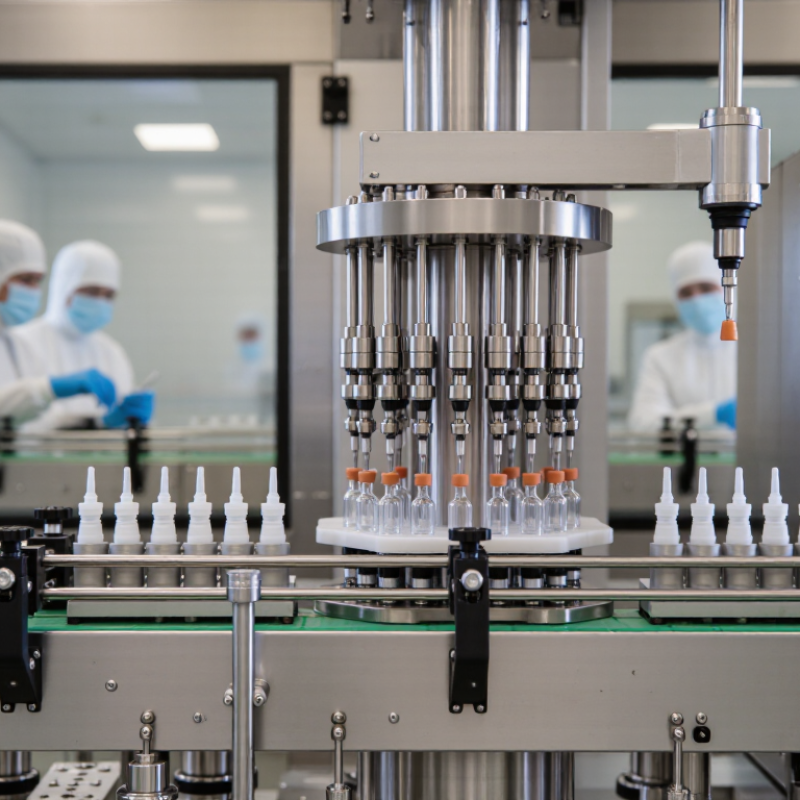
A pharmaceutical filling machine dispenses measured doses into containers such as vials, bottles, syringes, or ampoules. It supports liquid, suspension, cream, and powder products, depending on its design. The machine usually combines a product tank, pump, filling nozzles, sensors, and control software. Each component must work together to protect dosage accuracy and product quality.
In practical production, filling is more than moving liquid into a container. The system must control volume, filling speed, foaming, dripping, and container position. Sterile applications also require cleanroom compatibility, suitable materials, sterilized contact parts, and documented validation. During equipment trials, technicians often check fill weight at different speeds. They also inspect nozzles after extended operation. Small leaks can create large quality problems. That detail is easy to miss.
When comparing top pharmaceutical filling machine manufacturers, buyers should examine testing records, calibration procedures, changeover time, cleaning access, and technical support. Clear documentation shows professional control. Reliable manufacturers should explain operating limits instead of promising perfect performance. No machine is perfect. Product viscosity, temperature, and container shape can change results. Operators still need training and careful monitoring. A polished specification sheet cannot replace a realistic factory test. That is worth remembering.
How Do China’s Top Pharma Filling Machine Manufacturers Operate?
China’s top pharmaceutical filling machine manufacturers usually operate through a controlled engineering process. They begin by studying the product, container, fill volume, and production speed. These details shape the machine’s dosing system, contact materials, and cleaning design.
Experienced teams often build trial units before final production. During factory testing, engineers check filling accuracy, nozzle movement, sealing performance, and alarm responses. Sensors record pressure, temperature, and container position. Operators then review the data instead of relying only on visual inspection. Small deviations matter.
Cleanability is treated as a daily operating requirement. Smooth surfaces, limited dead corners, and removable parts help reduce residue risks. For sterile applications, manufacturers may integrate enclosed filling areas and controlled air systems. Documentation usually includes equipment drawings, material certificates, operating procedures, and validation records. Trained technicians support installation, commissioning, and operator instruction at the customer’s site.
No production line is flawless. A poorly adjusted pump can create inconsistent volumes. A rushed cleaning check may hide residue. Reliable manufacturers investigate these weaknesses through calibration, repeated testing, and corrective actions. They also discuss maintenance honestly, including seal replacement, sensor checks, and software updates. This practical cooperation often reveals more than polished factory presentations. Feedback from operators can still improve the design.
Which Technologies Define Leading Chinese Manufacturers?
China’s leading pharmaceutical filling machine manufacturers are defined by process control, not polished brochures. Their equipment combines servo-driven dosing, precision pumps, and recipe-based automation. These systems maintain stable fill volumes when viscosity or container size changes. In practice, operators can review alarms, batch data, and adjustment history from a centralized interface.
Aseptic technology is another important measure. Modern lines may use isolators or restricted-access barriers to reduce human intervention around open containers. Clean-in-place and steam-in-place functions support repeatable sanitation cycles. High-quality machines also monitor pressure, temperature, airflow, and filter conditions continuously. Sensors are useful only when calibration records are clear and accessible.
Inspection technology adds another layer of reliability. Vision systems can detect missing closures, liquid levels, damaged containers, and visible particles at production speed. Some manufacturers integrate rejection confirmation, data logging, and secure user permissions. This helps auditors trace what happened during a batch, not merely what should have happened. Still, automation is not a substitute for trained technicians. A sensor may drift, and a software alarm may be misunderstood. That weakness deserves honest testing.
The strongest manufacturers usually provide factory acceptance testing, installation guidance, validation documents, and responsive maintenance support. They understand that a filling line must fit cleanroom layouts, utility limits, and local procedures. Flexible change parts are valuable when several container formats share one line. Yet excessive flexibility can increase cleaning time and operator error. Practical engineering means balancing speed, sterility, verification, and maintainability.
How to Evaluate China’s Pharma Filling Machine Suppliers?
How to Evaluate China’s Pharma Filling Machine Suppliers?
Choosing a Chinese pharma filling machine supplier requires more than comparing prices. Grand View Research’s 2024 report estimates steady growth in pharmaceutical packaging machinery through 2030. That growth increases supplier choices, but not necessarily quality.
Ask for a complete URS response, material certificates, calibration records, and batch-testing data.
Review filling accuracy across low, medium, and high speeds. A stable result matters more than a perfect showroom sample. I would also inspect welds, seals, product-contact surfaces, and clean-in-place design. Small gaps can hold residue.
Tips: Request FAT and SAT protocols before signing. Confirm IQ, OQ, and PQ support, spare-part availability, and remote troubleshooting. PMMI’s 2024 pharmaceutical packaging report emphasizes flexibility, automation, and data integration.
Check whether the machine records alarms, recipes, access changes, and rejection rates.
Ask for anonymized installation references in similar sterile or liquid applications. Speak with operators, not only sales staff.
Supplier evaluation should include technical behavior after delivery. Can engineers respond within one business day? Are manuals clear enough for maintenance teams? Does the supplier provide change-control support when container sizes change?
FDA process-validation guidance stresses documented, repeatable control rather than one successful run. That principle is useful here.
A lower quote may hide longer commissioning or difficult cleaning. I would score suppliers using evidence, then revisit the score after a factory audit. My own judgment can still be wrong; production data should have the final voice.
What Industries Use Chinese Pharmaceutical Filling Machines?
Chinese pharmaceutical filling machines serve more than conventional tablet factories. Their strongest demand comes from sterile injectable plants, vaccine sites, biologics facilities, CDMOs, and hospital-compounding operations. They also appear in oral-liquid, ophthalmic, diagnostic-reagent, nutraceutical, and selected cosmetic production. IQVIA Institute’s Global Use of Medicines 2024–2028 forecasts roughly 500 billion dollars in additional global medicine spending by 2028. That expansion favors flexible filling lines, especially where products change often. Vials dominate many sterile applications. Prefilled syringes and cartridges are growing too.
In practice, buyers evaluate filling machines by container format, viscosity, dose range, and cleanroom class. Biologics need gentle, low-shear dosing. Vaccines often require small batches, cold-chain discipline, and rapid changeovers. CDMOs prioritize recipe control and format flexibility. Oral liquids need accurate dosing and anti-foaming handling.
The 2024 BioPlan Associates bioprocessing survey highlights manufacturing flexibility and single-use adoption as continuing industry priorities. Chinese equipment can fit these needs, but validation evidence matters more than catalog speed. A fast machine still fails when cleaning records, aseptic simulations, or data integrity are weak. That is the uncomfortable part.
Tips: Request media-fill results, dose-accuracy data, cleaning-validation support, and FAT/SAT records. Test the hardest formulation, not water. Check local service response and spare-part lead times. Leave room for operator mistakes; real factories are not perfect. A risk-based URS should define alarms, reject handling, sterilization interfaces, and electronic records before quotation.